
Linum, read 2026-11-08. Not an online generator.
P-JiT 21K locally: official, ComfyUI, and MLX
Two people at Linum trained a 2.18B pixel-space model, no VAE, for about $21,038. This page only compares public ways to run it. Nano AI does not host the weights and does not generate with P-JiT 21K.
On Nano AI
This box opens Nano Banana 2.1, not P-JiT 21K
1K, 8 credits, a new still. The four run paths below stay on your machine. A ComfyUI note on this site is /relayvsr.
Linum's model card and README, read 2026-11-08: P-JiT 21K cannot write text or posters. It struggles with full-body shots, crowds, and several people in one scene. Those limits are the authors'. This site does not add a fix.
- Made by
- Linum
- Released
- November 4, 2026
- Run on Nano AI
- Nano Banana 2.1 · 8 credits per image
- Page updated
- November 8, 2026
Source: linum.ai
Text and bodies
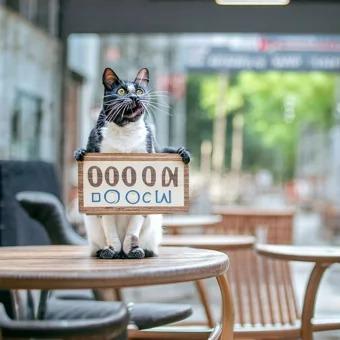
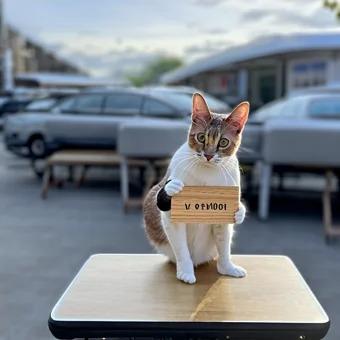
The sign frames under the facts are one prompt from KOBO Lab, 2026-11-06, three seeds, cropped from the bottom row of their grid so the portrait rows are not on this page. None of the boards reads KOBO LAB. That matches Linum's own limit. It is not a Nano AI image.

What P-JiT 21K is
Sahil Chopra and Manu Chopra, the two-person lab Linum, published the note on 2026-11-04. The run is 610M samples at 512px, then about 50M at 1024px, plus post-training. They price it at 8,415 H100-hours times $2.50, which is $21,038. The weights are Apache-2.0. The text encoder is a frozen Qwen3.5-4B. There is no VAE: the model draws pixels.
Sampling in the official README is 50 Euler steps, adaptive projected guidance at scale 15, noise scale 4, and an empty negative prompt. The model was trained at five sizes near one megapixel: 1024×1024, 864×1216, 1152×864, 1248×832 and 1280×720. Short prompts are worse; the README's upsampler calls Claude through OpenRouter and needs a key. --no_upsample skips that call. This page did not run any of it.
The sign frames under the facts are one prompt from KOBO Lab, 2026-11-06, three seeds, cropped from the bottom row of their grid so the portrait rows are not on this page. None of the boards reads KOBO LAB. That matches Linum's own limit. It is not a Nano AI image.
P-JiT 21K in public sources
- Lab
- Linum, two people. Note dated 2026-11-04.
- Training cost they print
- $21,038. 8,415 H100-hours at $2.50.
- Weights
- Apache-2.0. No VAE. 2.18B DiT.
- On Nano AI
- Not hosted. The button is Nano Banana 2.1, 1K, 8 credits.
P-JiT 21K run paths
Only figures that a public page printed. Read 2026-11-08.
- 1
generate.py
Linum generate.py. CUDA. First run downloads weights. No VAE.
git clone https://github.com/Linum-AI/pjit-21k && cd pjit-21k python3 -m venv .venv && source .venv/bin/activate pip install -e . - 2
Rebel ComfyUI
Own Euler APG nodes. INT8 not supported. Not an official Linum project.
git clone https://github.com/RealRebelAI/ComfyUI-PJiT21K-Rebel.git - 3
PedroMarinho
Stock KSampler. Load VAE set to pixel_space. bf16 and int8 ConvRot. ComfyUI 0.44.0, or master of 2026-11-05.
cd ComfyUI/custom_nodes git clone https://github.com/PedroMarinhoDev/ComfyUI-PJiT - 4
MLX
Apple silicon. README: bf16 matches Linum's gallery seeds; 8-bit can fork one.
pip install git+https://github.com/felix-ab/pjit-mlx
Weights
| File | Size | Where | Note |
|---|---|---|---|
| model.safetensors | 8.7 GB | Hugging Face, first run | fp32 DiT. Linum README. |
| pjit_21k_bf16.safetensors | 4.37 GB | models/diffusion_models | Pedro README. Same pixels as fp32, he writes. |
| pjit_21k_int8_convrot.safetensors | 2.33 GB | models/diffusion_models | Pedro README. About 1.8× the step rate on his RTX 3090. |
| MLX 8-bit export | 6.9 GB | Download named in the MLX README | Peak 3.6 GB with --low-memory is memory, not the file size. |
Four paths, one checkpoint
Official script
generate.py is Linum's. It asks for a CUDA GPU. The README does not print a full-image time.
Two ComfyUI repos
Rebel uses its own Euler APG sampler and says INT8 is not supported. PedroMarinho uses stock KSampler plus int8 ConvRot.
MLX is a different machine
The MLX README times an M4 Pro. It does not report an NVIDIA time. 8-bit there can fork a seed.
P-JiT 21K run paths
Only figures that a public page printed. Read 2026-11-08.
| generate.py | Rebel ComfyUI | PedroMarinho | MLX | |
|---|---|---|---|---|
| What runs | Linum generate.py. CUDA. First run downloads weights. No VAE. | Own Euler APG nodes. INT8 not supported. Not an official Linum project. | Stock KSampler. Load VAE set to pixel_space. bf16 and int8 ConvRot. ComfyUI 0.44.0, or master of 2026-11-05. | Apple silicon. README: bf16 matches Linum's gallery seeds; 8-bit can fork one. |
| Sampler they print | 50 Euler steps, guidance scale 15, noise scale 4, empty negative. | Euler APG, 50 steps, guidance 15, momentum -0.75, eta 0, rescale 10, noise scale 4. | 50 steps, euler, scheduler simple, cfg 15, empty negative. The loader brings APG. | The README's table is the same 50-step APG comparison. |
| License on the page | Code and weights Apache-2.0. HF tag apache-2.0. | Upstream called Apache-2.0. A license for the integration files was not stated. | Code GPL-3.0. Weights Apache-2.0, on the README badge. | Code Apache-2.0. The README also says the weights and Qwen3.5-4B are Apache-2.0. |
| Hardware in the source | README: a CUDA GPU. DiT 8.7 GB fp32. Text encoder 8 GB bf16. No card named. | Maintainer: Windows portable ComfyUI, RTX 3070, 8 GB. | README: tested on an RTX 3090, 24 GB. The badge says VRAM from 4 GB. | README: M4 Pro, 48 GB. |
| Time in the source | Linum README: not reported. Pedro on an RTX 3090: Linum's code 0.38 s/step; the fp32 row says 0.35 s/step. | not reported | README, RTX 3090, 1024×1024, caption included: about 17 s bf16 and 10 s int8. KOBO Lab, RTX 5090, 2026-11-06, second image: about 4.6 s bf16 and 6.1 s int8. The two reports do not agree which file is faster. | README, M4 Pro, one 1152×864 image, 50 steps: bf16 sampling 69 s, total 72 s; 8-bit sampling 77 s, total 79 s. 8-bit with --low-memory peaks at 3.6 GB for the whole process. |
| Text and bodies | Linum: cannot write text or posters. Struggles with full body, crowds, and several people. | Same weights. That README does not add a separate sign test. | The README repeats the same limits. KOBO Lab, same sign prompt: 0 of 6 frames readable as KOBO LAB. | The README says the model cannot render text and struggles with full-body figures and crowds. |
Jump to the four paths
P-JiT 21K run paths
- 1
Official script
generate.py is Linum's. It asks for a CUDA GPU. The README does not print a full-image time.
- 2
Two ComfyUI repos
Rebel uses its own Euler APG sampler and says INT8 is not supported. PedroMarinho uses stock KSampler plus int8 ConvRot.
- 3
MLX is a different machine
The MLX README times an M4 Pro. It does not report an NVIDIA time. 8-bit there can fork a seed.
Sampler they print
Sampling in the official README is 50 Euler steps, adaptive projected guidance at scale 15, noise scale 4, and an empty negative prompt. The model was trained at five sizes near one megapixel: 1024×1024, 864×1216, 1152×864, 1248×832 and 1280×720. Short prompts are worse; the README's upsampler calls Claude through OpenRouter and needs a key. --no_upsample skips that call. This page did not run any of it.
Noodle bowl
A ceramic bowl of noodles on a dark wooden counter, steam rising, side window light, no hands, no people, no text.
Lighthouse
A small lighthouse on a rocky point at sunset, long smooth water, no boats, no people, no text.
Balloon
A single hot-air balloon above green fields at sunrise, wide sky, no letters on the balloon, no people, no text.
Sign that fails
A wooden sign on an empty cafe table. The sign should read KOBO LAB in clear capital letters. No people, no other text.
Text and bodies
- Linum's model card and README, read 2026-11-08:
- Linum's model card and README, read 2026-11-08: P-JiT 21K cannot write text or posters. It struggles with full-body shots, crowds, and several people in one scene. Those limits are the authors'. This site does not add a fix.
- not reported
- README, RTX 3090, 1024×1024, caption included: about 17 s bf16 and 10 s int8. KOBO Lab, RTX 5090, 2026-11-06, second image: about 4.6 s bf16 and 6.1 s int8. The two reports do not agree which file is faster.
On Nano AI
This box opens Nano Banana 2.1, not P-JiT 21K
1K, 8 credits, a new still. The four run paths below stay on your machine. A ComfyUI note on this site is /relayvsr.
FAQ
P-JiT 21K
Only figures that a public page printed. Read 2026-11-08.
What P-JiT 21K is
Not hosted. The button is Nano Banana 2.1, 1K, 8 credits.
Text and bodies
Linum's model card and README, read 2026-11-08: P-JiT 21K cannot write text or posters. It struggles with full-body shots, crowds, and several people in one scene. Those limits are the authors'. This site does not add a fix.
Two ComfyUI repos
Rebel uses its own Euler APG sampler and says INT8 is not supported. PedroMarinho uses stock KSampler plus int8 ConvRot.
Time in the source
Linum README: not reported. Pedro on an RTX 3090: Linum's code 0.38 s/step; the fp32 row says 0.35 s/step.
Hardware in the source
Rebel's README names an RTX 3070 and does not print a full-image time: not reported.
More from Nano AI
Jump to the four paths
Two people at Linum trained a 2.18B pixel-space model, no VAE, for about $21,038. This page only compares public ways to run it. Nano AI does not host the weights and does not generate with P-JiT 21K.